
Good Growing: Keeled treehoppers, the bugs with bodyguards
PROTECTED CONTENT
If you’re a current subscriber, log in below. If you would like to subscribe, please click the subscribe tab above.
Username and Password Help
Please enter your email and we will send you a password reset link.

By Ken Johnson, Horticulture Educator
University of Illinois Extension
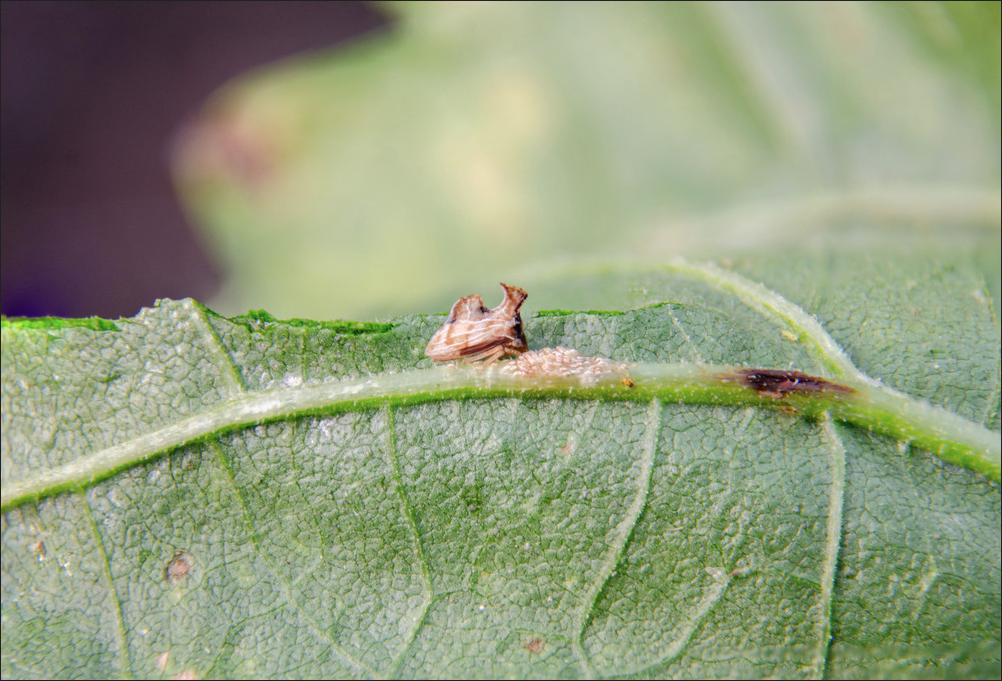
Photo by Ken Johnson, University of Illinois Extension.
Female keeled treehoppers will protect their eggs and nymphs.
If you take some time to look closely at a plant, chances are you’ll see a variety of different insects. Take sunflowers, for example: many different pollinators can be seen visiting the flowers, from bees and wasps to beetles, butterflies, and flies. Other insects can be found feeding on the plant, like caterpillars, beetles, and aphids. You may also notice ants, and chances are those ants may be visiting an often-overlooked insect, keeled treehoppers.
What are keeled treehoppers?
Keeled treehoppers belong to the family Membracidae, a group of insects known for their unique, sometimes otherworldly appearances. Treehoppers have large pronotums (part of the thorax) that are humped or pointed and often resemble a thorn.
Keeled treehoppers are small, about ¼ inch long, brown, and get their names because their pronotums look like saddle-shaped keels. They can be found feeding on a variety of different plants and seem to be particularly fond of plants in the aster family, including asters, cup plant, dahlia, ragweed, and sunflowers.
Protective mothers
and ants
Female keeled treehoppers will lay their eggs in the midribs of leaves. Unlike the vast majority of insects that will lay eggs and then leave, keeled treehoppers will guard their egg masses. The females will often stand over or near the eggs and defend them from potential predators, and will continue to stay with and protect them after they have hatched. This parental care is considered presocial behavior (more advanced than solitary insects, but not quite as complex as the social lives of termites, ants, and some bees and wasps).
In addition to the protection their mothers provide, keeled leafhoppers are also often protected by ants. Treehoppers have piercing-sucking mouthparts that they will use to drink sap from a plant’s phloem. (Phloem transports sugary sap from the leaves to the rest of the plant.) Phloem has relatively high levels of sugars but has low levels of other nutrients (think of it as candy). Because of this, phloem-feeding insects need to consume a lot of it to get the nutrients they need. This also means they consume a lot of sugar they don’t need, and they get rid of it as honeydew. This honeydew is what attracts ants.
Ants and honeydew-producing insects have a mutualistic relationship. The honeydew serves as a food source for the ants, and in turn, the ants will protect the insects, in our case, keeled treehoppers, from potential predators.
How do I get rid of treehoppers?
Keeled treehoppers will overwinter as adults and will emerge in early spring to begin feeding and egg-laying; there will be multiple generations a year. While the females will cause some damage to leaves while laying eggs, the damage usually isn’t bad enough to warrant management. The same can be said for feeding damage; populations rarely get high enough to cause significant damage to plants.
Good Growing Fact of the Week: Keeled treehoppers (and other insects in the suborder Auchenorrhyncha) rely on symbiotic bacteria to get essential amino acids that aren’t present in the phloem they eat.
ABOUT EXTENSION: Illinois Extension leads public outreach for University of Illinois by translating research into action plans that allow Illinois families, businesses, and community leaders to solve problems, make informed decisions, and adapt to changes and opportunities.