
Wrapping up Black History Month
PROTECTED CONTENT
If you’re a current subscriber, log in below. If you would like to subscribe, please click the subscribe tab above.
Username and Password Help
Please enter your email and we will send you a password reset link.
First integrated school in America
By Austin Andre
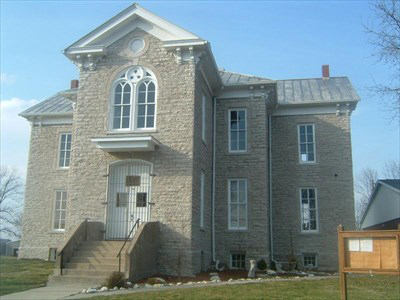
Hamilton School
This past month was a special one for our country; Black History Month serves as an annual reminder of the struggles of African-Americans throughout history in the face of extreme opposition to freedom. Heroic tales of black students integrating segregated schools despite all efforts to stop them, like the stories of Vivian Malone and the Little Rock Nine, are shining examples of determination and courage toward equal opportunity. However, there is one story that many have never heard of. It originates in the very heart of Jersey County.
The story of Silas Hamilton, and the schoolhouse that bears his name, is largely forgotten in the scope of racial history. It’s a story worth telling and remembering. It shows us that even amidst hatred, bigotry, and chains, the human heart can provide a beacon of hope to those who need it most.
Silas Hamilton was born on May 15, 1775, a full year before the words “All men are created equal” were etched onto our constitution. Growing up in colonial Vermont, he didn’t share the views of slavery that many of his constitutes held.
Being an idealist, in 1820, he purchased his own plantation in Mississippi, intending to ameliorate slavery. Believing that through the humane treatment of enslaved people, other plantation owners would take note of his success and therefore abandon the practices of torture and abuse. One particular incident in Virginia moved Hamilton profoundly. Crossing the Potomac River, he heard a troubling cry from a child that he couldn’t ignore.
Being a doctor, he assumed whoever was crying needed medical attention immediately. The cries were from a young enslaved boy named George. The child was no older than three at the time. He was grieved upon learning his mother had been sold to a plantation in the south. Many thought the child would grieve himself to death. Hamilton purchased the boy and gave him the last name Washington after his owner’s name.
Washington was treated like nothing short of family by Hamilton. His own son passed away in the 1820s. By 1830, Hamilton was fed up with convincing slave owners that his humane treatment was far more optimal for enslaved people.
Entirely abandoning the practice of slavery, he took all 28 of his servants from Mississippi and freed them in Cinncinati. Hamilton then brought Washington and a few other former servants to Illinois to help settle a new land known as Gullum, now present-day Otterville. He dubbed the surrounding area Otter creek after its resemblance to a creek that ran through his hometown of Tinmouth, Vermont. Intentions were to educate Washington into becoming a missionary and send him to Liberia.
However, these plans were abandoned when Hamilton passed away on Nov. 19, 1834. Hamilton was the only physician in the county, and the overbearing work of helping those in need took its toll on his body.
In his will, he left a $4,000 bequeath to establish a primary school. In 1835, it was built and became the first free integrated place of education in the country. In 1839, it was officially designated the “Hamilton Primary School.” This served the local residents in the area well, being one of the best schools in the state, it provided education and recreation for its students. Washington attended the school until his 20s and worked as a successful farmer until his death in 1864.
Upon his passing, Washington left a nuncupative will, which instructed a monument in honor of Hamilton to be built and an educational fund for African-Americans to be created. This remains the only known example of a freed slave erecting a monument honoring his former owner. Both Hamilton and Washington were buried side by side together, for both men had been inseparable in life.
The George Washington Education Fund remained one of the oldest scholarship funds in the state and helped several African-Americans advance into college. In 1874, the original school was torn down and rebuilt with limestone. The school served local residents until 1971 when it was closed.
The school, monument, and graves are still in Otterville today. They stand as reminders of progress and unity at a time when such things were rare in our country. This story is a small one when compared to the likes of others. Nonetheless, it is a remarkable tale of human love and honor that transcends the confines of race and status.
